
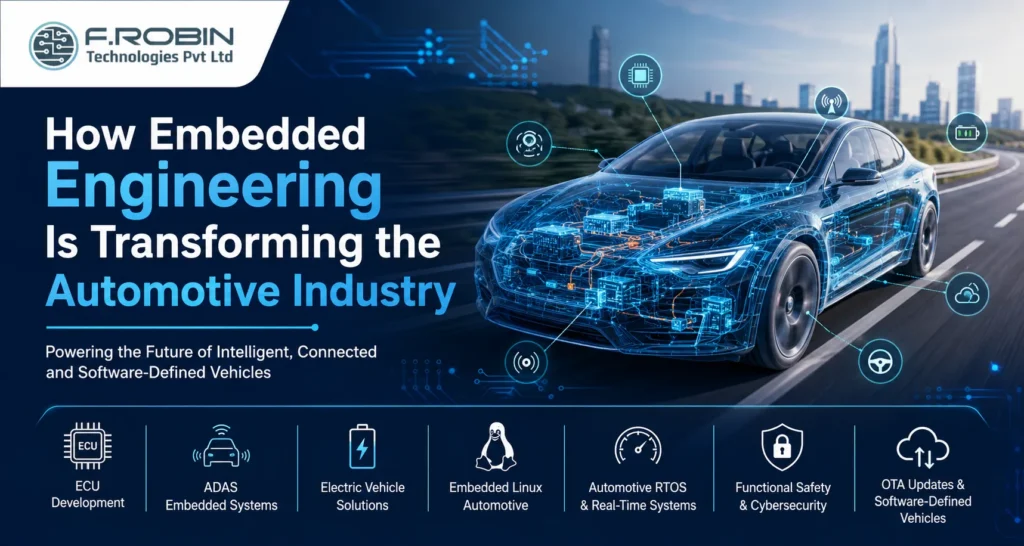
Modern vehicles are evolving into intelligent computing platforms powered by software, sensors, processors, and connected technologies. At the center of this transformation is Embedded Engineering, which enables real-time communication, automation, safety, and vehicle intelligence.
From advanced driver assistance systems (ADAS) and electric vehicle battery management to infotainment and autonomous driving technologies, automotive embedded systems are redefining the future of mobility.
Today’s automotive manufacturers rely heavily on embedded engineering services to develop scalable, reliable, and high-performance systems that improve safety, connectivity, and driving experience. As the industry moves toward software-defined vehicles, embedded technologies continue to shape how vehicles are designed, controlled, and maintained.
In this article, we explore how embedded engineering is transforming the automotive industry, key technologies involved, major applications, industry challenges, and future trends driving intelligent transportation.
What Is Embedded Engineering?
Embedded Engineering refers to the design and development of dedicated hardware and software systems that perform specific functions within larger electronic systems.
In the automotive industry, embedded systems are responsible for controlling critical vehicle operations such as:
- Engine management
- Airbag systems
- Infotainment platforms
- Battery management systems
- Navigation systems
- Vehicle communication networks
- Driver assistance technologies
Unlike general-purpose computing systems, automotive embedded systems are optimized for:
- Real-time processing
- Functional safety
- Reliability
- Low power consumption
- Fast response times
These systems integrate processors, firmware, operating systems, sensors, and communication protocols to enable intelligent vehicle functionality.
Real-Time Processing in Automotive Embedded Systems
Real-time processing is one of the most important aspects of automotive embedded systems. Critical vehicle operations such as braking, steering, and collision detection require immediate responses without delays.
Automotive RTOS platforms help ensure deterministic performance for these safety-critical applications.
Why Embedded Engineering Matters in Automotive
The automotive industry is rapidly transitioning toward connected, autonomous, and electric vehicles. This evolution increases the demand for advanced embedded engineering services.
Modern vehicles contain hundreds of electronic control units (ECUs) and millions of lines of software code. Embedded systems allow manufacturers to improve:
- Vehicle safety
- Fuel efficiency
- Driver experience
- Connectivity
- Autonomous capabilities
- Predictive diagnostics
- Energy optimization
Without embedded engineering, modern innovations such as adaptive cruise control, lane-keeping assistance, smart infotainment, and electric vehicle management would not exist.
How Automotive Embedded Systems Improve Vehicle Safety
Automotive embedded systems continuously monitor sensor data and vehicle conditions in real time. These systems can instantly detect hazards, trigger warnings, and activate safety mechanisms.
Examples include:
- Automatic emergency braking
- Blind spot monitoring
- Collision avoidance systems
- Airbag deployment systems
These technologies significantly reduce accidents and improve passenger safety.
Key Automotive Applications of Embedded Systems
Embedded systems are now integrated into nearly every modern automotive function.
Embedded Software in Connected Vehicles
Connected vehicles use embedded systems to enable:
- GPS navigation
- Vehicle telematics
- Remote diagnostics
- Smartphone integration
- Over-the-air updates
- Cloud connectivity
Embedded Linux automotive platforms are commonly used for connected vehicle infrastructure because of their flexibility and scalability.
ADAS Embedded Systems
ADAS embedded systems improve vehicle intelligence and driver assistance.
These systems process information from:
- Radar sensors
- Cameras
- LiDAR
- Ultrasonic sensors
ADAS applications include:
- Adaptive cruise control
- Lane departure warning
- Parking assistance
- Driver monitoring systems
- Traffic sign recognition
Because these systems must react instantly, they require powerful embedded processors and real-time operating systems.
ECU Development and Intelligent Vehicle Control
What Is ECU Development?
Electronic Control Unit (ECU) development involves designing embedded controllers that manage specific automotive functions.
Each ECU is responsible for dedicated operations such as:
- Engine control
- Transmission management
- Climate control
- Battery monitoring
- Brake systems
- Airbag deployment
Modern vehicles may contain more than 100 ECUs communicating through automotive networks.
ECU development includes:
- Embedded firmware programming
- Hardware-software integration
- Driver development
- System testing
- Validation and compliance verification
Automotive firmware development ensures ECUs operate reliably under harsh environmental conditions.
Key Functions of Automotive ECUs
Automotive ECUs help manufacturers improve:
- Fuel efficiency
- Engine performance
- Vehicle diagnostics
- Emissions control
- Passenger safety
- Energy management
As vehicle software complexity increases, ECU architecture becomes even more important for automotive system engineering.
Embedded Engineering in Electric Vehicles
Electric vehicles depend heavily on embedded systems to optimize performance, efficiency, and battery safety.
Battery Management Systems in Electric Vehicles
Battery Management Systems (BMS) monitor:
- Battery temperature
- Voltage levels
- Charging cycles
- Energy distribution
- Battery health
These intelligent control systems maximize battery lifespan while preventing overheating and power failures.
EV Charging Infrastructure and Smart Power Management
Modern EV platforms also support:
- Fast charging communication
- Charging station integration
- Power optimization
- Smart grid interaction
These technologies improve charging efficiency and enhance overall electric vehicle reliability.
Automotive RTOS and Real-Time Performance
What Is Automotive RTOS?
An automotive RTOS (Real-Time Operating System) is designed to process tasks within strict timing constraints.
These operating systems ensure deterministic performance for safety-critical systems such as:
- Braking systems
- Steering control
- Autonomous driving functions
- Engine management systems
Popular automotive RTOS platforms include:
- QNX
- VxWorks
- AUTOSAR RTOS
- FreeRTOS
Popular Automotive RTOS Platforms
Automotive RTOS platforms help improve:
- Reliability
- Functional safety
- Task scheduling
- Fast interrupt handling
- Real-time communication
These systems are essential for advanced automotive electronics systems.
Challenges in Automotive Embedded Engineering
Despite rapid innovation, automotive embedded engineering faces several technical challenges.
Functional Safety in Automotive System Engineering
Automotive embedded systems must comply with strict safety standards such as ISO 26262.
Manufacturers must ensure:
- Fault tolerance
- System redundancy
- Reliable operation
- Safety validation
Cybersecurity Challenges in Vehicle Embedded Systems
Connected vehicles face growing cybersecurity threats.
Manufacturers must protect:
- Vehicle communication networks
- OTA updates
- ECU communication
- Telematics systems
- Connected APIs
Automotive cybersecurity is becoming a major priority in embedded engineering.
Future Trends in Automotive Embedded Systems
The future of automotive innovation will continue to rely on embedded technologies.
AI and Software-Defined Vehicles
Software-defined vehicles (SDVs) use centralized software platforms to manage vehicle functions dynamically.
Artificial intelligence improves:
- Autonomous navigation
- Predictive maintenance
- Driver behavior analysis
- Traffic optimization
Over-the-Air Updates and Automotive Firmware Development
OTA updates allow manufacturers to remotely deploy:
- Firmware patches
- Security updates
- Performance improvements
- New features
This reduces maintenance costs while improving customer experience.
Best Practices for Automotive System Engineering
Organizations implementing automotive embedded systems should follow several best practices.
- Use scalable embedded architectures
- Implement automated testing frameworks
- Prioritize cybersecurity validation
- Ensure real-time system optimization
- Perform hardware-software co-design
- Follow automotive compliance standards
- Validate systems through regression testing
Strong embedded engineering services help automotive companies accelerate innovation while maintaining safety and reliability.
Comparison Table
| Technology | Primary Purpose | Key Benefit |
|---|---|---|
| ADAS Embedded Systems | Driver assistance | Improved vehicle safety |
| Automotive RTOS | Real-time control | Deterministic performance |
| Embedded Linux Automotive | Connectivity and infotainment | Scalability |
| ECU Development | Vehicle function control | Intelligent automation |
| EV Embedded Systems | Battery and motor management | Energy optimization |
Key Takeaways
- Embedded Engineering powers modern automotive innovation.
- Automotive embedded systems improve safety and connectivity.
- ECU development enables intelligent vehicle control.
- ADAS embedded systems support autonomous driving features.
- Embedded Linux automotive platforms accelerate connected vehicle development.
- Automotive RTOS ensures real-time reliability.
- Electric vehicles rely heavily on embedded technologies.
- Future vehicles will become increasingly software-defined.
Conclusion
The automotive industry is undergoing a major transformation driven by Embedded Engineering. From intelligent safety systems and connected infotainment platforms to electric vehicle battery optimization and autonomous driving technologies, embedded systems now define the future of mobility.
As vehicles become increasingly software-driven, manufacturers require scalable, secure, and high-performance embedded solutions to remain competitive.
Organizations investing in advanced automotive embedded systems and engineering expertise will be better positioned to lead the next generation of intelligent transportation and connected mobility solutions.
Frequently Asked Questions
Automotive embedded systems are specialized hardware and software solutions integrated into vehicles to control functions such as engine management, infotainment, braking systems, ADAS, and battery monitoring. These systems process real-time data to improve vehicle safety, performance, and efficiency.
ECU development is the process of designing Electronic Control Units that manage specific automotive operations such as engine control, transmission systems, airbags, and battery management. It involves embedded software programming, hardware integration, validation, and testing.
