
Sheet Metal vs Die-Cast vs Plastic Enclosure: How to Choose
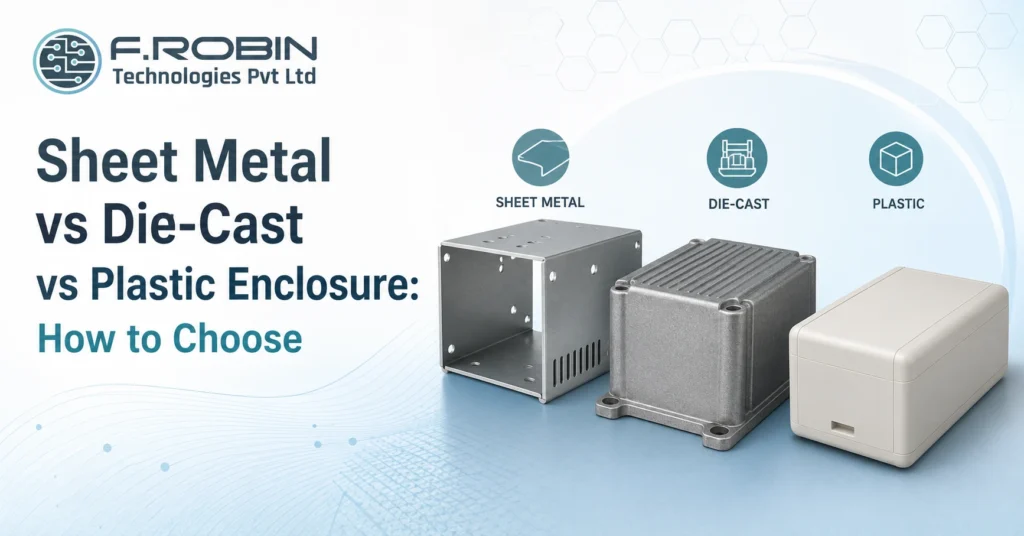
Every enclosure material comparison — sheet metal vs die-cast vs plastic — eventually comes down to the same three contenders: sheet metal, die-cast metal, and plastic. Each has real strengths, and picking the wrong one costs you money, schedule, or reliability. A sheet metal enclosure might be perfect for a low-volume industrial unit, while a plastic enclosure suits a high-volume consumer product — and neither would be right for a compact, high-shielding RF product that calls for die-cast. This guide walks through the trade-offs of sheet metal, die-cast, and plastic so you can make this enclosure material comparison with confidence. We cover cost, strength, EMI shielding, thermal performance, tooling, and volume for each material, then give you clear rules for which to choose — whether you are building in Chennai, Bangalore, or anywhere else. The Quick Answer: Enclosure Material Comparison In short: choose a sheet metal enclosure for low-to-mid volume, ruggedness, and easy modification; choose a die-cast enclosure for high shielding, strength, and thermal performance in demanding environments; choose a plastic enclosure for high volume, low cost, and design freedom. No single material wins every enclosure material comparison the right choice depends on your volume, environment, and budget. The sections below break down each option so you can match it to your specific product. Sheet Metal Enclosures In this enclosure material comparison, a sheet metal enclosure is formed from bent and welded metal panels — typically steel or aluminium. It is a strong, practical choice across many industrial and instrumentation products. Strengths: Limitations: Sheet metal suits products where volume is moderate, ruggedness matters, and the design may still evolve. It remains a workhorse choice across mechanical enclosure design for exactly these reasons. Die-Cast Enclosures For the next step in this enclosure material comparison, a die-cast enclosure is formed by injecting molten metal usually aluminium or zinc into a mould. It delivers the highest strength and shielding of the three options, at a higher tooling cost. Strengths: Limitations: Die-cast is the right call when a product needs rugged strength, superior shielding, or strong thermal performance think RF equipment, automotive electronics, or premium instrumentation and volume is high enough to justify the mould. Plastic Enclosures Rounding out this enclosure material comparison, a plastic enclosure is typically injection-moulded, offering the lowest per-unit cost at high volume and the greatest design freedom. Strengths: Limitations: Plastic is the natural choice for consumer electronics, wearables, and any high-volume product where cost and design freedom outweigh the need for inherent shielding or ruggedness. Side-by-Side Comparison The table below summarizes this enclosure material comparison at a glance. Factor Sheet metal Die-cast Plastic Tooling cost Low High High Best volume Low–mid Mid–high High EMI shielding Good (native) Excellent (native) Poor (needs coating) Strength Good Excellent Moderate Thermal performance Good Excellent Poor–moderate Design freedom Limited Moderate High Weight Heavier Heaviest Lightest Typical use Industrial, instrumentation Rugged, RF, premium Consumer, high-volume Reading across the rows, each material clearly wins on different axes — which is exactly why matching the material to your specific priorities matters more than picking a “best” one. Key Decision Factors in Your Enclosure Material Comparison Beyond the table, weigh these factors specifically for your product: Weighing these together, rather than any single factor alone, produces the right answer for your specific product. A Decision Framework Use these steps to make your enclosure material comparison concrete: Following this framework turns a subjective debate into an evidence-based decision and a prototype run is the cheapest way to validate your choice before locking in tooling. Common Mistakes to Avoid Watch for these frequent errors when choosing between materials: Avoiding these keeps your enclosure material comparison grounded in your product’s real needs, not assumptions. Local Manufacturing Considerations Your material choice also interacts with what is easy to source locally. In hubs like Chennai and Bangalore, sheet metal fabrication and die-casting have strong, established local supply chains, thanks to the region’s automotive and industrial manufacturing base. Plastic injection moulding is equally well served, particularly for high-volume consumer work. Before finalizing this enclosure material comparison for your product, ask prospective manufacturing partners in your target city which materials and processes they run in-house versus subcontract. A material that is straightforward to source and tool locally will usually mean shorter lead times and easier iteration a real, practical factor alongside the technical trade-offs already discussed. Key Takeaways CTA – Enclosure Material Comparison Not Sure Which Enclosure Material Is Right for You? Weighing sheet metal, die-cast, or plastic for your product? Our Mechanical Engineering Services help Chennai and Bangalore hardware companies choose and design the right enclosure material — balancing cost, EMI shielding, strength, and volume — from concept all the way through production. Explore Mechanical Design Services Talk to Our Engineering Team FAQ – Sheet Metal vs Die-Cast vs Plastic Enclosure Frequently Asked Questions
