
How to Spec a Mechanical Design Brief That Gets Results
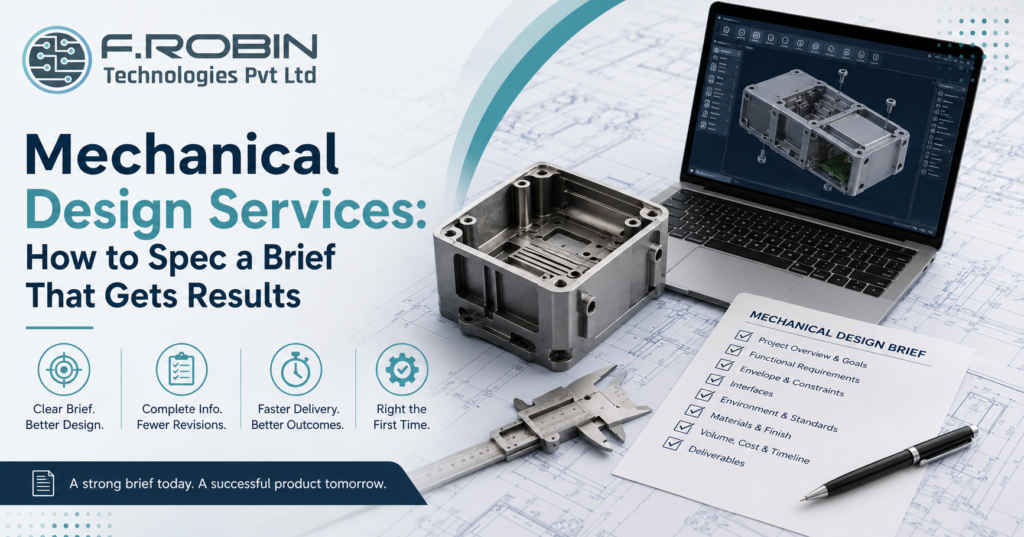
The quality of your mechanical design services engagement depends heavily on one thing you control: the brief you provide. Hand a design team a clear, complete brief, and you get accurate quotes, fewer revisions, and a product that fits the first time. Hand them a vague one, and you invite guesswork, delays, and costly rework. In short, a good brief is the single biggest lever you have over the outcome. This how-to guide shows exactly what to include in a mechanical design brief that gets results. We cover requirements, the envelope, interfaces, standards, and every other detail a mechanical design services team needs from you upfront — so your next project starts on solid ground and stays there. Why a Good Mechanical Design Brief Matters A brief is the foundation every design decision is built on. When it is clear, mechanical design services can move fast and confidently. When it is vague, they must either guess or stop and ask — and both cost time. The principle is simple: garbage in, garbage out. Missing requirements surface later as expensive redesigns, misfit parts, or failed compliance. A precise brief, by contrast, lets a mechanical design services team quote accurately, plan properly, and design right the first time. Think of the brief as an investment. The hour you spend making it complete saves days of back-and-forth and rework later. That is why the best projects always start with a strong brief, not a hopeful conversation. Before You Write the Brief A little preparation makes the brief far stronger. Before you start writing, gather the inputs that shape every decision: Assembling these first turns a blank page into a structured brief and prevents the mid-project surprises that come from missing context. What to Include in Your Brief A complete brief answers the questions a mechanical design services team will otherwise have to ask. Include each of the following. 1. Project Overview and Goals Start with the big picture: what the product is, who uses it, and what success looks like. This context helps a mechanical design services team make good decisions when details are unclear. 2. Functional Requirements List what the product must do — the functions, performance targets, and must-have features. Clear requirements are the backbone of any brief and the first thing a design team looks for. 3. The Envelope and Space Constraints Define the envelope: maximum dimensions, weight limits, and any space the design must fit within. If the product mounts somewhere specific, say so. Envelope constraints shape the entire concept. 4. Interfaces Detail every interface — how the design connects to the PCB, to other mechanical parts, and to the user. Strong PCB mechanical integration depends on sharing connector positions, mounting points, and board outlines here. 5. Environment and Standards Specify the operating environment (temperature, moisture, shock, vibration), the required IP rating, and any compliance standards the product must meet. These drive material, sealing, and testing choices. 6. Materials and Finish Note any material preferences, finish requirements, or brand/appearance needs. If you have no preference, say that too — it tells the team they have freedom to optimize. 7. Volume, Cost, and Timeline State expected production volume, target cost, and key dates. Volume changes the whole approach, so mechanical design services need it early to recommend the right process and materials. 8. Deliverables Expected Finally, list what you expect to receive: 3D CAD, drawings, prototypes, or production files. Clear deliverables prevent mismatched expectations at the end. Good vs Vague: An Example The difference between a weak and a strong brief is specificity. Compare two ways of stating the same requirement: The vague version forces the design team to guess — and guesses get corrected later at your expense. The specific version gives mechanical design services a clear, testable target they can design and verify against. Every requirement in your brief should be measurable like this: a number, a standard, or a pass/fail condition. Apply that precision line by line, and revision cycles fall away. A Mechanical Design Brief Checklist Use this checklist to confirm your brief is complete before you send it to a mechanical design services partner: If every box is ticked, your brief is ready. Any gaps are questions the design team would otherwise have to chase so fill them now. Common Brief Mistakes to Avoid Even experienced teams write weak briefs. Watch for these: Avoiding these keeps your mechanical design services project smooth and predictable. Most delays trace back to a gap in the brief — which is exactly why completeness pays off. How a Good Brief Speeds the Project A strong brief does more than prevent problems it accelerates the whole engagement. With complete information, mechanical design services can quote accurately, avoid clarifying delays, and design confidently from day one. The payoff shows up throughout the project: fewer revision cycles, better concept-to-production design, and a product that fits the first time. Because the team is not guessing, they spend their time engineering rather than chasing missing details. In practice, a good brief often shortens the timeline more than any other single factor. That makes writing it well one of the highest-return tasks you can do before engaging a mechanical design services team. It also builds trust: a supplier who receives a professional, complete brief treats the project — and the client — more seriously from the very first conversation. Key Takeaways Conclusion A great mechanical design brief is the highest-return work you can do before engaging mechanical design services. Cover the goals, requirements, envelope, interfaces, environment, standards, materials, volume, cost, and deliverables, and you give the design team everything they need to quote accurately and design right the first time. Skip these, and you invite guesswork and rework. The choice — and the outcome — is largely in your brief. Ready to Brief Your Project? Our Mechanical Engineering Services turn a clear project brief into concept-to-production results, ensuring seamless PCB mechanical integration throughout the development process. Collaborate with our experienced engineering team to accelerate
