
PCB Mechanical Integration: Avoiding Costly Fit Clashes
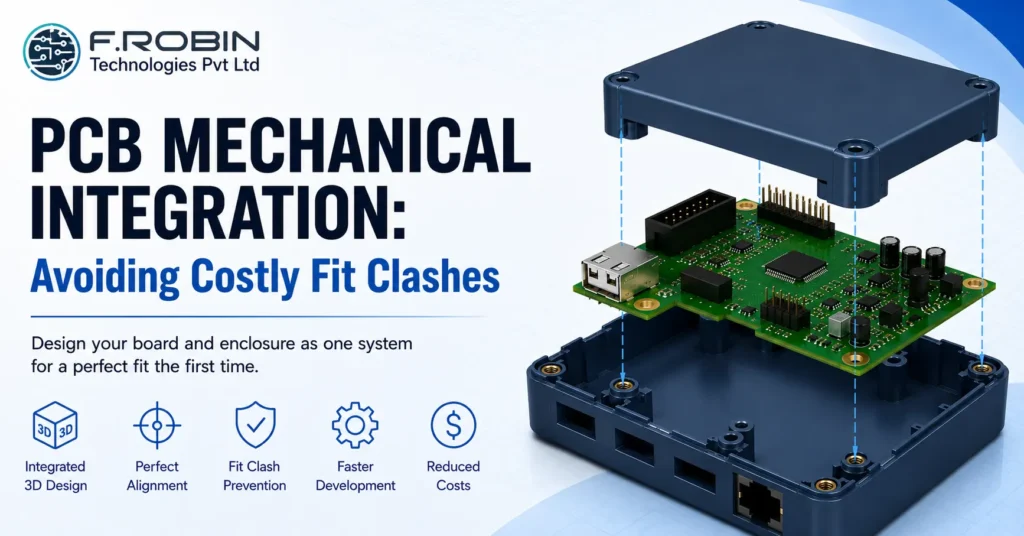
PCB mechanical integration is the practice of designing your board and its enclosure as one system, so they fit together perfectly the first time. When it goes well, connectors line up, components clear the lid, and assembly is effortless. When it goes wrong, you get fit clashes misaligned ports, components hitting the housing, mounting holes that miss and each one can trigger an expensive board or tooling respin. This guide explains how to get PCB mechanical integration right. We cover why fit clashes are so costly, what causes them, and the best practices that keep your board-to-enclosure design clash-free. Whether you build rugged industrial units or compact consumer devices, these techniques will save you time, money, and frustration. What Is PCB Mechanical Integration? PCB mechanical integration is the coordinated design of a printed circuit board and its mechanical enclosure so the two fit and function together. It ensures the board outline, components, connectors, and mounting points all align with the housing that surrounds them. In practice, this means the electrical and mechanical teams share information and a common 3D model throughout design. The board defines connector positions and component heights; the enclosure defines walls, cut-outs, and standoffs. PCB mechanical integration brings these two views together so nothing collides. Done well, it is invisible — everything simply fits. Done poorly, it surfaces as clashes late in development, when fixes are most expensive. That is why treating board-to-enclosure design as one integrated task, not two separate ones, is the foundation of reliable hardware. Why Fit Clashes Are So Costly A single fit clash can be far more expensive than it first appears. Because mechanical and electrical issues often surface only after prototypes or tooling exist, fixing them means redoing expensive work. Poor PCB mechanical integration leads to costly outcomes: Each of these costs time and money that early integration would have prevented. In short, the few hours spent coordinating board and enclosure up front save weeks of rework later which is exactly why PCB mechanical integration deserves attention from day one. Common Causes of Fit Clashes Most fit problems trace back to a handful of recurring causes. Recognizing them early is half the battle. Almost all of these stem from designing the board and enclosure separately. When the two are integrated from the start, these clashes are caught on screen instead of on the bench. PCB Mechanical Integration Best Practices Follow these best practices to keep board-to-enclosure design clash-free. Applied together, these practices turn PCB mechanical integration from a source of surprises into a predictable, repeatable process. They also tie directly into broader mechanical design services, where the enclosure and board evolve as one. The ECAD-MCAD Workflow The technical heart of PCB mechanical integration is exchanging data between electrical CAD (ECAD) and mechanical CAD (MCAD). The PCB tool holds the board and components; the MCAD tool — often SolidWorks — holds the enclosure. Keeping them in sync is what prevents clashes. Teams typically share data using neutral formats: The goal is a single, shared source of truth. When the PCB moves a connector, the enclosure team sees it immediately; when the enclosure narrows a wall, the layout team adjusts. This continuous loop is what makes mechanical engineering and analysis of the assembly accurate and clash-free. A Pre-Release Fit Checklist Before releasing the design, run through this quick checklist: Ticking every box before release is the simplest way to avoid a costly respin. If any item fails, fix it now not after tooling. Common Mistakes to Avoid Even strong teams slip up on integration. Watch for these: Avoiding these keeps your PCB mechanical integration smooth and your project on schedule. Key Takeaways Conclusion PCB mechanical integration is the difference between hardware that fits the first time and a project derailed by costly respins. By designing the board and enclosure as one system — sharing a 3D model, aligning connectors early, accounting for tolerance, and reviewing the full assembly before release — you eliminate the fit clashes that wreck schedules and budgets. Building a Product Where the PCB and Enclosure Must Fit Perfectly? Our mechanical engineering services and PCB layout design services handle PCB mechanical integration from concept to production. Work with our engineering team to eliminate design clashes, reduce development risk, and accelerate time to market. Talk to Our Engineering Team Frequently Asked Questions 1. What is PCB mechanical integration? PCB mechanical integration is the coordinated design of a printed circuit board and its enclosure so they fit and function together, aligning the board outline, components, connectors, and mounting points with the housing. 2. Why is PCB mechanical integration important? It prevents costly fit clashes — misaligned connectors, components hitting the lid, or mismatched mounting holes — that would otherwise trigger board respins, tooling rework, and schedule delays. 3. What causes PCB-enclosure fit clashes? Common causes are connector misalignment, tall components, mismatched mounting holes, insufficient clearance, board outline errors, and tolerance stack-up — usually from designing board and enclosure separately. 4. What is the ECAD-MCAD workflow? The ECAD-MCAD workflow exchanges data between electrical CAD (the PCB) and mechanical CAD (the enclosure, often in SolidWorks) using STEP and IDF/IDX formats, keeping both designs in sync. 5. How do I avoid connector alignment problems? Align connectors and ports with enclosure cut-outs early, share a common 3D model, and include tolerance margin so manufacturing variation does not cause misalignment. “`
